Showing posts with label phillips. Show all posts

Tuesday, December 20, 2011

The 2011 All-Division Team, Part 4: NL Central

NL Central RF: Lance Berkman
Part 4 of 6: National League Central


Before turning to another awesome edition of the All-Division Team, I must make an announcement.  An apology, actually.  In my post comparing Prince Fielder and Yu Darvish, I incorrectly reported that the Blue Jays had won his bidding rights, which I believed to be true at the time of writing.  Although the Jays were the second-closest team to earning the rights, the Rangers actually won them.  I got some faulty information.  Won't happen again.  OK?  OK!

In the creation of the All-Division Team, however, selections are subjective.  Feel free to disagree and argue against any of the winners!

C Yadier Molina, STL 
'Yadi' has been a key contributor to both World Champion Cardinals teams from the past half-decade.  Since 2006, though, he has also developed into probably the best defensive catcher in the National League.  His knack for throwing to the bases after pitches to keep runners close proves very effective, and the team leader is still only 28.  At the plate Molina displays rare contact skills from a catcher, striking out under 50 times in 475 at-bats.  Batting .305 doesn't hurt either.  Competition: Geovany Soto (CHC), Michael McKenry (PIT), Humberto Quintero (HOU), Jonathan Lucroy (MIL), and Ramon Hernandez (CIN).

1B Prince Fielder, MIL
In his ever-pivotal walk year, the Prince put on a show.  Ever wonder how Ryan Braun really beat Matt Kemp in the MVP race, even though Kemp's stats were better?  Look no further.  Providing Braun with ultimate lineup protection, Fielder walked more than he struck out in 2011 (highly rare for a power hitter) and blasted 38 homers and 120 RBIs while slugging .566.  It's no wonder that a feared power hitter like Braun, who bats directly in front of Fielder, went the whole season being intentionally walked just twice.  If I were a pitcher, I wouldn't want to face the Prince either.  Competition: Albert Pujols (STL), Carlos Pena (CHC), Joey Votto (CIN), Lyle Overbay (PIT), and Brett Wallace (HOU).

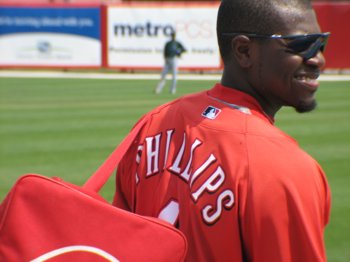
2B Brandon Phillips, CIN
Who's the best shortstop in the NL Central?  Why of course, it's Dat Dude BP!  Brandon Phillips, who entertains fans on Twitter with the aforementioned handle, enjoyed one of his best seasons in a year that found him taking home his first Silver Slugger and his third Gold Glove after making his second All-Star appearance in July.  Besides continuing to be a 20-20 threat and a consistently clutch run producer, Phillips batted .300 for the first time in his career.  His positive leadership and attitude and vital traits to the Reds organization at the moment as its future is unclear.  Way to go, Brandon.  Competition: Skip Schumaker (STL), Neil Walker (PIT), Jose Altuve (HOU), Darwin Barney (CHC), and Rickie Weeks (MIL).

3B Aramis Ramirez, CHC
Ramirez had another slow start in the power department for the second year in a row.  This time, however, his swing was looking good and his mechanics were correct, he just wasn't clearing the wall for whatever reason.  The Chicago weather heated up around the same time his bat did, though, and he finished with 26 homers.  A rare breed of the low-strikeout slugger, Ramirez struck out only 69 times.  In his final season with the Cubs he cemented his place as one of the Cubs' great third basemen of all-time.  Competition: Scott Rolen (CIN), David Freese (STL), Casey McGehee (MIL), Pedro Alvarez (PIT), and Chris Johnson (HOU).
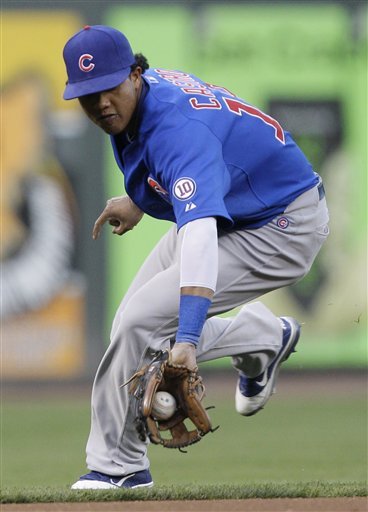
NL Central SS: Starlin Castro
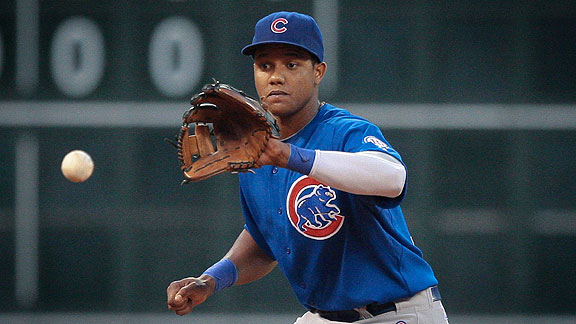
SS Starlin Castro, CHC (2nd)
In one of the better breakout performances of 2011, this sophomore was the National League's hit king with 207 knocks.  Developing power began to show its potential as the season went on, and much improved baserunning skills showed the makings of a franchise player.  While defense is still an issue, it was better than it was a year before and strides of improvement can be expected for 2012.  With so much raw talent, there's no telling the ceiling on this guy's future.  If 2011 was just the beginning, it was pretty awesome.  Competition: Clint Barmes (HOU), Ryan Theriot (STL), Yuniesky Betancourt (MIL), Ronny Cedeno (PIT), and Paul Janish (CIN).

LF Ryan Braun, MIL
Steroids, anyone?  Even if Braun took performance-enhancing drugs during the 2011 season, it was exciting to watch while it lasted.  He took the middling Brewers to the NLCS and led the best team in the league for most of the season.  Braun put up above average numbers even for power hitters but perhaps more impressive was the .397 OBP, which meant runners on base for the batters behind him, most notably the Prince.  An outburst of speed at age 27 also had pitchers distracted.  Competition: Alfonso Soriano (CHC), Carlos Lee (HOU), Matt Holliday (STL), Ryan Ludwick (PIT), and Yonder Alonso (CIN).

NL Central CF: Andrew McCutchen
CF Andrew McCutchen, PIT (2nd)
McCutchen put it all together in his second full season.  The Pirates, who surprised the world with their contention into July, relied on McCutchen's 20-20 talent everyday.  His energy invigorated a dead Pittsburgh franchise and the winning ways will be back sometime soon as long as Andrew McCutchen is in center.  He revealed a newfound patience in 2011, a tool that eludes most young power-speed dual threat players.  Competition: Jason Bourgeois (HOU), Marlon Byrd (CHC), Nyjer Morgan (MIL), Drew Stubbs (CIN), and Jon Jay (STL).

RF Lance Berkman, STL
Say what?  I was thinking the Cardinals' signing of Berkman - to start in right field, no less - would be something along the lines of disastrous.  Apparently Berkman still has game though, and he proved it with an incredible .412 OBP and 31 homers, batting .301 overall.  His defense was okay in right field, but his offensive production far outweighed any criticism there.  Playing 145 games, he also walked 92 times, among the leaders in the NL.  This was simply one of the best offensive seasons in baseball, not just of right fielders or comeback veterans.

SP Matt Garza, CHC
The NL Central was a surprisingly weak division for starting pitchers.  Garza, though, was huge for his team.  In a Cubs rotation that essentially imploded with the loss of the #4 and #5 starters in the first week of the regular season, Garza provided stability and consistent outings all season long.  In return, he earned some of the worst run support in the NL.  Being a leader and ultimate team player, however, was not lost on this writer.  Competition: Yovani Gallardo (MIL), Chris Carpenter (STL), Kevin Correia (PIT), Bronson Arroyo (CIN), and Wandy Rodriguez (HOU).

CP John Axford, MIL
Any Cubs fan who watched the Cubs fail in Milwaukee last season got to see a load of this guy, but not for very long because the Cubs were little resistance to Axford's dominant ways.  He finished the season 46-for-48 in saves with a 1.95 ERA, striking out almost four for each batter he walked.  The Brewers can't ask for much more out of this 6-5 beast who seemingly came out of nowhere to become the shutdown closer on the NL's most complete team.  What a stud.  Competition: Carlos Marmol (CHC), Mark Melancon (HOU), Francisco Cordero (CIN), Jason Motte (STL), and Joel Hanrahan (PIT).


That does it for another installment of the MLB All-Division Team!  Next up is the AL West, followed by the NL West and finally a summary of the whole thing.  

Saturday, September 17, 2011

Road Trip Analysis: New York, Cincinnati

Cubs steal emotional finale in New York on 9/11's 10th anniversary

Record: 3-4
Final Record: 65-85

Ever since the Mets traded Francisco Rodriguez to the Brewers in July, the search has been on for the closer of the future.  Hard-throwing Bobby Parnell couldn't handle the job in his trial, so Manny Acosta got the honors on Friday night with a 4-3 lead in the ninth.  Darwin Barney's RBI single gave Acosta a blown save and a wide round of boos from the Citi Field crowd, but the offense redeemed him in the bottom of the inning on Justin Turner's walk-off double.

Late in the game Saturday, the Mets looked to win another tight game.  Jason Bay came through with a two-out RBI single to give the Mets a 4-3 lead in the eighth.  After Acosta's blown chance the night before, the Mets staff came crawling back to Parnell to save the next game.  Parnell blew yet another lead, as the Cubs continued their recent comeback trend.  Aramis Ramirez's two-run single to give the Cubs a deciding 5-4 lead came on a 98 mph fastball from Parnell to knot the series at one.

It's not everyday that ESPN shows a Major League Baseball game, in its primetime Sunday night slot no less, between two teams that are a combined 45.5 games out in their respective divisions.  For the Cubs, that's all Sunday night's game in New York was.  A game.  For the Mets, it was much more.  It was practically a mourning, an emotional anniversary of a terrorist attack in their community.  Many fans in the stands were personally connected to those that died on 9/11, and a big pregame ceremony was held in remembrance.  I thought the game would be sold out for sure, and it sure as hell would've made a greater statement if it was.  But apparently much of Queens didn't get the memo, as only 33,502 came to watch another tight game.

Tyler Colvin had three RBIs by the fifth inning when the Cubs held a 4-1 lead, but the Mets started chipping away on Matt Garza, eventually tying it in the eighth off Jeff Samardzija.  It would remain tied until the 11th, when rookie Josh Stinson gave up the lead followed by a two-run double each for Alfonso Soriano and Barney off Ryota Igarashi.  A Geovany Soto sac fly made it 10-4 and this insurmountable lead won the game and series for the Cubs.

Rodrigo Lopez was far from perfect in his start at Cincinnati Monday night.  Luckily, he didn't have to be perfect, as the Cubs offense put up 12 runs in support.  Lopez, who has always had problems with allowing home runs, gave up a 502-foot moon shot over the right field bleachers and into the Ohio River to Juan Francisco - the fifth homer of his Major League career.  But Jeff Baker, Starlin Castro, and Ramirez would all homer later as a washed up Dontrelle Willis really struggled.  The 12-8 win gave the Cubs 22 runs in two games.

Unfortunately, the first game of this four-game series in Cincy was the only winner for the Cubs.  In his last start of the year before being shut down by an innings limit, Mike Leake shut down the offense and narrowly outdueled Ryan Dempster in a 2-1 win.  Brandon Phillips, aka 'Dat Dude BP' (his nickname and twitter account), homered in the first.

Ramon Hernandez hit a three-run homer off starter Casey Coleman to open the scoring Wednesday night and the Reds never looked back in a blowout win.  Reds starter Johnny Cueto had to leave early with an injury, but that did nothing to awake the suddenly silent Cubs bats.

Just as suddenly as they fell silent, the bats woke up in the first inning of the series finale.  Marlon Byrd and Carlos Pena both hit two-run homers in the first inning off Homer Bailey.   Then it fell silent once again until the ninth, when the 4-0 lead had turned into a 6-4 deficit.  An exciting rally ensued; Barney drove in his second ninth inning game-tying run of the road trip.  As is typical, the Cubs stranded runners in the 10th and 11th innings before James Russell curiously blew two lefty-on-lefty matchups.  Joey Votto began the 11th with a double and Jay Bruce ended it with a walk-off two-run homer.

I don't know you about you, but this losing stuff ain't sittin' right.  Still.  Many fellow Cubs fans I know have regressed into that 'I've moved on' phase recently, but many times I can call them out on this bluff.  The best hope for a winner right now in Chicago may be the Bears, but losing still hurts.

Including wins in the first two games against the Astros, the Cubs need to go at least 8-2 to match last season's record.  They have clinched a losing season, but can avoid losing 90 games by going at least 6-4.          

Sunday, June 12, 2011

MLB's Best Uniforms, Part 1: Home Uniforms

Robinson Cano and the Yankees
check in at #2.
Because two Mondays ago was Memorial Day, you (might) have known what that meant.  It was time for MLB to roll out this year's version of the Stars and Stripes caps that are worn every year on Memorial Day, July 4th, and September 11th.  In 2008 and 2009, all teams wore the same caps, just with their logo on them and weren't given any choice in the matter.  But in 2010, teams were given the choice to do a red or blue bill and logo outline.  The Cubs took red.

The design of these caps was leaked before the design was released by manufacturer New Era just a few days before Memorial Day.  Leaked, as in the Mets decided to wear the caps earlier than scheduled thanks to the Bin Laden events.  And so, feeling patriotic, the Mets wore these for a home game against the Giants just a while ago.  They appear to be pretty much the same thing as last year's version, except that the back is now the same color as the bill.  They appear to be running out of ideas, to be honest.  It's important to remember that although wearing 'patriotic' caps may seem cool, they only exist for more revenue, which is exactly why they insist on making a new design every year.

Anyways, this gets us to the main subject of this post.  This is the first of a three-post series in which I will count down MLB's top ten of each type of uniform (home, away, and alternate).  This is supposed to start arguments, not end them.  Of course, this is being written in my opinion and I want to point out that, maybe because of my age, I'm much more of a modern style of uniform liker and less traditionalist than most.  This countdown only ranks the top ten out of the 30 current home uniforms.  No throwbacks or retro uniforms.  The top ten:


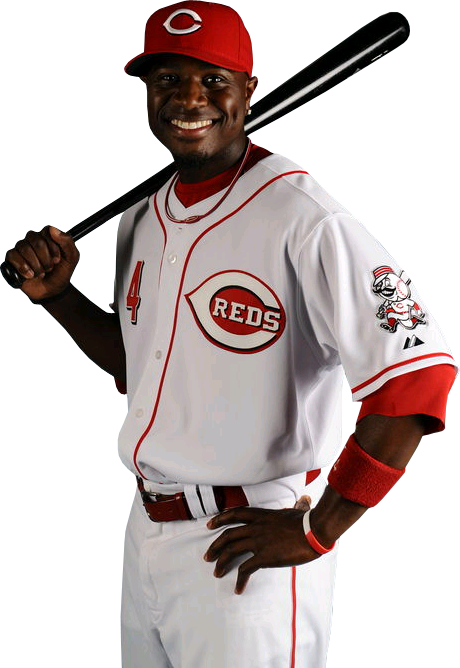
10. Cincinnati Reds
In the late 90s and early 2000s, the Reds were just another of those teams to go BFBS (black for black's sake), meaning they just added black to their color scheme spontaneously because it was a fad at the time.  In fact, the BFBS revolution probably influenced more teams uniforms than any other color fad, ever.  It began fading in the early to mid 2000s, but the Reds didn't unroll these (photo, left) clean, straight up home unis until 2007.  I think this version rivals all other that the Reds have ever had, and considering that the Reds have been a franchise for nearly 150 years, that's an awfully long time.  The black remains, but in a minor role as the highlight color.


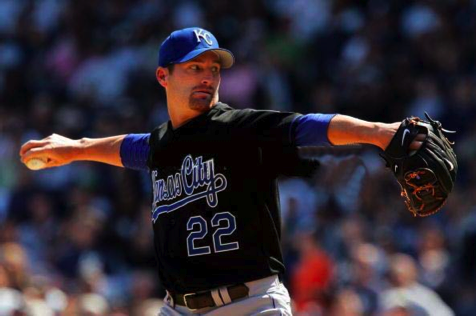
9. Kansas City Royals
The Royals are yet another team that went crazy with black after being a royal blue and gold team for the rest of franchise history.  But in 2006, they dropped all black whatsoever.  All that remained was the core uniform that they've always had.  The Royals as a franchise have made tremendous progress since unveiling the new uniforms, from renovating Kauffman Stadium to developing the best farm system of all time to hosting the All-Star Game next season.


8. Seattle Mariners
This is probably not one you would expect to see on a list like this.  And to be sure, this uniform has its share of flaws.  For one, the script is boring.  For two, this looked a whole lot better when they wore this with a teal cap, which they did from 1993 to 2003.  But the Mariners home uniform makes the top ten because it's just so unique.  The blue they use, which I don't even know what to call, looks great complemented by the teal that has sort of disappeared over the last decade but returned with the new teal alternates they have this season.  The humble style of the uniforms are very much characteristic of the organization.

7. Chicago Cubs
Bias aside, the Cubs pinstripes is one of the greatest uniforms around, and that's not going to change soon.  It's also been improved with minor changes over the years.  It's such a classic look that under the Ricketts' 'administration', the Cubs have worn it exclusively at home.  The blue alternate only appears on the road because of the popularity of this uniform.  Also, it's even better this year with the Ron Santo '10' patch on the right sleeve (can't be seen on this photo).


6. Cleveland Indians
Not one you would expect to see on this list, but the Indians just have great stuff all around.  Great stadium, great uniforms, great logo, great fan base, and this year, a great team.  What really makes these worthy of the top 10 is the cursive script on the chest.  Although the design overall isn't the most classic, it's a good mix of old school (the writing script) and modern (the blue piping down the middle).


5. Baltimore Orioles
Does something look different about this uniform when compared to those of the rest of the league?  Maybe it's that there's no red or blue, making the Orioles one of only a handful of teams that don't choose one.  The Giants are the only other team to venture into black-and-orange territory, but the Orioles do it way better.  For once, the black actually seems to fit the orange very well, as opposed to a lot of other teams where it seems forced.


4. Atlanta Braves
Respect the class!  This uniform has all the ingredients to pull off the retro, classic look that they're going for.  Personally, I love the red bill on the cap.  The contrast there is what makes the entire thing work.  In fact, I wouldn't even be opposed to the Cubs wearing their red-billed cap at home.  But I digress.  The blue sleeves make this uniform an equal mix of blue and red.  And although they aren't the most original as the Braves have changed uniforms quite a bit in their history, it sure looks original.


3. San Diego Padres
It seems as if most Padres fans prefer the old lame brown and mustard uniforms, but I beg to ask why a change is even necessary.  The current home uniforms are perfect for all that San Diego is.  Not including sealife like Marlins and (Devil) Rays, the Padres are the only team in the league with a specific ocean reference.  The theme in their logo is the script as a wave and it's terrific.  In fact, the Padres script on the home uniform is hands down the best script in baseball.  Besides that, the uniforms are simple and great.  It's basically navy-on-white with a hint of sand.


2. New York Yankees
This one is a total no-brainer.  Like the Yankees, hate the Yankees, but either way the Yankee pinstripes is one of the most legendary uniforms in the history of sports.  When considering this uniform, consider all that it's meant for baseball as a whole in pop culture and everyday life.  This is one of those aspects about the league that makes it what it is today.  As far as I know, the Yankees have never had an alternate uniform and they've never had to because this is all the franchise will ever need.  It is perhaps the most famous pinstriped uniform, as well as the thickest; technically, the Yankee uniform's pinstripes are wider than those of any other teams'.  Could this be symbolic of the importance of the pinstripes?


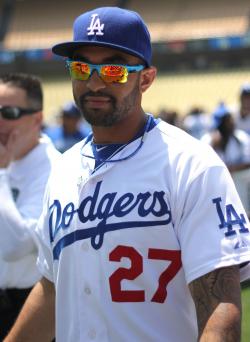
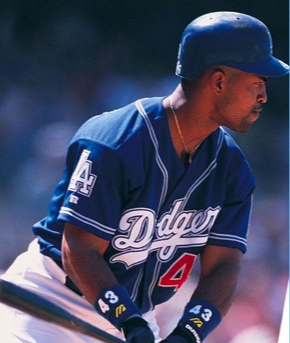
1. Los Angeles Dodgers       
Much like the Yankees, the Dodgers have kept things the same uniform wise for quite a while in Chavez Ravine.  Except for this weird one-year experiment back in the late-90s, the Dodgers haven't used hardly any home alternates.  Technically, the white fabric that the Dodgers use is actually the brightest white fabric used on any uniform in MLB.  The Dodgers have done experimenting with taking names off the jerseys, but even now that they do the script is small and a lot less noticeable that most uniforms.  So the Dodgers, much like the Cubs, have done minor tweaks to the uniform but ultimately have kept the same uniform alive for many years.  The result?  A modern, classic and clean looking uniform that goes great with some late-arriving Dodger Dog-eating Dodger fans at good ol' Dodger Stadium.


Thank you for reading my countdown!  Do you agree or disagree with any of the rankings?  Definitely shoot me an email right here.  Happy summer; it could be a long one with these Cubs, so get outside or celebrate the fall of the Miami Heat!        

Sunday, January 30, 2011

"The Most Inexplicable Trade Ever?"

Now that the well-publicized Vernon Wells to the Angels for Mike Napoli and Juan Rivera has sunk in for more than a week, I think it's time we compare.  Is this deal the worst trade of the offseason?  Of the decade?  Ever?

The worst trade in the recent history of baseball before the Wells deal is, in my opinion, when the Expos traded Brandon Phillips, Cliff Lee, and Grady Sizemore to the Indians for Bartolo Colon back in 2002.  Colon had won 75 games over the past six seasons with the Indians, while none between Phillips, Lee, or Sizemore had even debuted in the Major Leagues.  Sizemore was just 19 at the time.  Colon went on to win 10 games for the Expos in 2004, then leave as a free agent that very offseason.  His WAR for that half season was 2.3.  In their respective careers, Phillips, Lee, and Sizemore have totaled a 51.9 WAR in the Major Leagues, although the Indians trade Phillips and eventually Lee also.  The bottom line is that the Expos sent their three best prospects for just one player in return, a 'rental' at that, seeing as how they knew Colon would be a free agent after that very season.  Clearly, it wasn't worth it.

Brandon Phillips has not gotten the most attention out there, but he quietly produces on the now-contending Reds.  His best season came in 2007, his second full season manning second base for Cincinnati in which he had a 30-30 offensive season, earning him some MVP votes.  He's been a consistent 20-20 player since 2006, but his run production took a step backward in 2010.  He was also thrown out 12 times to only 16 steals, but the 30 year old has lots of time to keep producing for the Reds.  His attitude and teammate chemistry make him a very valuable part to a Cincinnati Reds team that now depends on his leadership to contend.

Cliff Lee has arguably been in more trade/free agency rumors than any other player since 2009.  Playing for four teams in two seasons, Lee has become quite the hot commodity over this time.  Perhaps his most highly regarded trait is his control, something GMs scramble to acquire.  Lee walked just 61 in 444 innings between 2009 and 2010.  This is exactly the player Lee could have become playing for the Nationals, assuming they could sign him to an extension.  In 2005, just three years after the trade, Lee finished fourth in Cy Young voting with an 18-5 record and a 3.79 ERA.  The 2005 Nationals were a contending team in the first half, but lacked rotation depth and faded in the second half so Lee would have probably helped them become a winner.

Grady Sizemore was a 20-20 player in his first full season in 2005, at the age of 22.  He continued this trend until 2008, when he improved to 30-30.  From 2004-2007, he had a 3.7 defensive WAR, a signature characteristic of a five tool outfielder.  Oh, and he also had a 17.2 WAR over that time, followed by a 5.3 in 2008.  Although injuries have derailed his performance the last two seasons, Sizemore was arguably the best outfielder of the mid 2000s.  His combination of power, speed, defense, and enthusiasm for the game were enough to call him probably one of the best players in baseball as well.

Meanwhile, Bartolo Colon's career with his new team lasted a full three months and 17 starts.  The highlight of his tenure with Montreal came on August 19, 2002, when he shut out the Padres at home allowing two hits and two walks on 95 pitches.  Besides that and Colon's 10 wins in that second half, not much came to the Expos in this deal.  Colon signed with the White Sox in the offseason and good season there in 2003, and the Expos were left with nothing.  Essentially, the Expos gave up three future All-Stars in exchange for half a season from a decent starter in a season where the Expos never came close to the playoffs.

While that trade looks bad because Colon was gone in half a season and the other three are having great careers, Vernon Wells will probably have a decent career for quite some time on the Angels.  The fact that Wells is a good player is not being disputed by many; this trade looks worse on paper.  Wells' salary will not make his production worth it, and the Angels gave up the two following players:

Mike Napoli hit 20 homers for the third straight season in 2010, keeping up his reputation as a great power hitter for a catcher.  Napoli has always been a minus defensively, but his bat makes him a valuable commodity to a contending team, especially since power out of the catcher spot is hard to find.  Immediately after being traded to Toronto, the Blue Jays turned around and swung him to Texas.  Napoli is a great player to have on a winning team, which the Rangers figure to be in 2011.

Juan Rivera has also always been a negative defensively, but an effective player nonetheless.  Rivera had his best season in 2009, hitting 25 homers and 88 RBI in 138 games.  He doesn't walk much and probably won't make a big overall impact on a lineup on his own, making his best role a fourth outfielder or third outfielder subject to frequent substitution.

To be sure, Vernon Wells has had a nice career.  He was a consistent cog in the Toronto outfield for almost the entire 2000s.  From 2002-2010, Wells averaged .279 with 25 homers, 89 RBI, 9 steals, and a total 28.0 offensive WAR over that time period.  Despite two subpar seasons in 2007 and 2009, it's hard to look at the stat sheet and not realize he was a great player for some time.  

Now here's where it gets really, really ugly.  Vernon Wells enjoyed one of his best seasons in 2010, swatting 31 homers and 88 RBI.  But even that isn't good enough to live up to his contract.  The 32 year old Wells hit 16 or less homers in both 2007 and 2009 (in full seasons), providing for a real head scratcher as to why the Blue Jays would reward a 'slugger' with those gaping holes in the stat sheet with 7 years, $126 million.  Although the deal was signed in December 2006, it didn't go into effect until 2010, the first year of the deal.  Wells made over $15 million in 2010, but it gets worse.  Wells' deal runs for four more seasons, so he'll be 35 at the end, over which time the Angels are due to pay him around  $86 million.  In 2011, he's due $23 million and will be due $21 million in 2012, 2013, and 2014.  The $23 million he will make next season was higher than any non-Yankee in baseball.  Miguel Cabrera was the only player not playing in New York to earn $20 million in 2010, giving you an idea of what Wells' salary will be compared to.  Remember, although Wells has had some good seasons like 2010, he had two very bad seasons for a player who is being paid to drive the ball and these two seasons were recent.  Look at his stats page, scroll down to the Standard Batting chart, and notice the two seasons I've highlighted in blue.

So he's getting paid.  Like seriously paid.  Big time dough.  All that cash for a guy who's being paid for the run production, but is well past his peak and proof of that comes in the form of those two awful seasons that were 2007 and 2009.  And all that cash for a guy who had his best season, like, eight years ago.  His career highs in games, at-bats, plate appearances, runs, hits, doubles, homers (only 33), RBI, batting average, on-base percentage, slugging percentage, OPS, total bases, and even times hit by pitch, all came in 2003.  In 2003, he had lineup protection in Carlos Delgado behind him and table setters in Frank Catalanotto and Shannon Stewart in front of him, all three of whom are now out of the Majors.  Heading to the Angels, his only table setters will likely be Howie Kendrick and/or Erick Aybar, and his only lineup protection will be Torii Hunter.  The setup was better on the Blue Jays, and although a change of scenery could help him, his ceiling is low because there's no chance he will do much better than his 2010 output, if he even gets to that mark.  His career high of 33 homers in 2003 is nowhere near the career highs of the sluggers he is being to hit like.

In conclusion, I think the Vernon Wells trade is the worst trade of recent baseball history, worse than the Bartolo Colon deal.  Angels GM Tony Reagins had taken a lot of criticism nationwide for his whiffs on Jayson Werth, Carl Crawford, and Adrian Beltre.  This move was, without doubt, a desperation move to try to compensate for missing on those elite players.  But not only does Reagins have to give up two decent players in Napoli and Rivera, he is now stuck with what most baseball experts cite as 'baseball's most untradeable player' in Wells and his enormous contract.  In the Bartolo Colon trade of 2002, Colon was gone by that offseason and although this didn't give the Expos much value, it also didn't tie down their future, either.  Cliff Lee, Grady Sizemore, and Brandon Phillips all went on to be great players, but it's unlikely the Expos would have been able to resign all three or even two once they became established stars.  And now the Angels will have limited financial flexibility for at least the next offseason due to this contract monstrosity.  So while Wells may be smiling ear to ear to be out of Toronto where he never made the playoffs, Reagins won't be in four years.                

Tuesday, July 6, 2010

Homestand Wrapup: Pittsburgh, Cincinnati


Record: 2-5
Final Record: 35-47
Games Behind First: 11.5 GB

Wrigley Field isn't an advantage for anything these days.  The Cubs' home record fell to 20-23 after a very poor homestand.  The Cubs should've won two of three against the Pirates and two of four against the Reds, but they can never beat the teams they're supposed to and also can't beat the teams better than them.  The evil Pirates who probably now have destroying the Cubs as their only achievement this season, came to Wrigley Monday night.  Alfonso Soriano hit a home run for the Cubs only scoring, and Jose Tabata hit a go-ahead double in the top of the 9th to win it 2-1.  Soriano went deep two more times the next day but the Cubs only managed three runs.  Luckily, Ted Lilly was on his game and the Cubs snuck out a 3-1 win.  Wednesday was a game we would've had if it wasn't our defense failing us for the millionth time.  This time it was Aramis Ramirez in the top of the 8th, after a pitching duel between Tom Gorzelanny and Brad Lincoln in a 0-0 game.  An error putting on Andy LaRoche haunted the Cubs after Garrett Jones doubled to center to score him and later Sean Marshall walked in a run.  2-0.

The Cincinnati Reds came to town feeling pretty confident.  Behind the young superstars Joey Votto, Jay Bruce, Mike Leake and Drew Stubbs as well as the veterans Orlando Cabrera, Scott Rolen, and Bronson Arroyo, they were in first place heading into this series.  Soriano said before the series, "If we lose three, it could get ugly."  It's going to get ugly now, as the Cubs only put up a fight in two of the games and only won one.  On Thursday Tyler Colvin hit a clutch two-run single in the 8th to tie the game at two, but Drew Stubbs knocked in the go-ahead run in the 10th and the Reds won it in extras.  The Reds also won Saturday, 12-0 and for the Cubs there was literally nothing to report.  Brian Schlitter gave up five.  Yay.  Soriano hit an RBI single and Geovany Soto hit a two-run double in a three-run sixth in a 3-1 win Saturday, with Randy Wells pitching maybe his best game of the year.  It's been a struggle for the guy this season, so it was nice to see him pitch well and against a good team.  There were nine homers hit on Sunday.  Nine!  The Cubs' two were both from impressive Tyler Colvin, but the Cubs were blown out badly 14-3 from the Reds homers by Jonny Gomes, Paul Janish, Corky Miller, Brandon Phillips, Drew Stubbs, Drew Stubbs, and Drew Stubbs.  Stubbs surprisingly hit three homers although he is not necessarily known for his power.

Because of my busy week the last week, I didn't watch an out in a game of this homestand.  The week long drought was the longest since I became a Cubs fan on a day-to-day basis in mid 2006.  If you have something else to do with your spare time, right now I suggest you do so.  Watching this stuff is depressing.  Monday's game was promising in Arizona, but that doesn't mean anything anymore.  The problem I have with this team is that there are no strong spots.  We are bad against lefties, bad against righties.  Bad at home, bad on the road.  Bad in April, bad in May, bad in June, bad in July.  We aren't constantly getting swept and then sweeping other teams, but rather we are consistently bad against all.  We lose so many series that you wonder if there is ever a bright spot for this team.  I would feel that we are much stronger if we were streaky and won five in a row to lose five in a row right after because there is a good chance that sometime they could continue the winning formula over the rest of the season.  But no, this year we are just boring and losing.