Showing posts with label davis. Show all posts

Monday, January 2, 2012

Cubs Dump Sean Marshall; Acquire Travis Wood, 2 prospects from Reds


Sean Marshall, traded to Cincinnati, was the Cubs' best reliever

Cincinnati overpays for bullpen depth in the first Cubs rebuilding package

Vacation Note: I just got a look at the Miami Marlins’ new ballpark; pretty sweet.  If you’re in Miami and looking for it, I think it would be more helpful if I told you to look for an alien spaceship though.  The huge retractable roof stadium, named New Marlins (insert corporate sponsor here) Ballpark, is extremely tall and a sleek silver color all the way around with an oval-like curvature.  You can peek inside from behind the outfield (where the walls are open) and see the jumbotron and some of the upper deck seats.  I hope to return to see a game in the near future. 
      
Although it’s old news by now, the trade of Sean Marshall to Cincinnati was probably the most important of the offseason so far.  Its importance should not be overlooked.  Even though it was a trade of a setup man for a back-end, somewhat unproven starter and two prospects unheard of to the everyday fan, it represents the first rebuilding deal the Cubs have completed in, well, a while.  ‘Rebuilding’ has not exactly been the Cubs’ cup of tea over the last decade.  Theo Epstein and Jed Hoyer, however, are believers. 

In this faith, the Cubs will surely execute more rebuilding deals at some point, if not in the next month or so.  MLBTradeRumors.com is reporting interest from the Yankees, Red Sox, Blue Jays, Tigers, and Marlins in Matt Garza, although Detroit and Miami are the front runners at this point.  It may seem like a trade of Garza, especially following Marshall’s, would be the official raising of the white flag on the 2012 Cubs season.  However, the trade with the Rays that brought Garza to the Cubs must have looked the same way to their fans.  They basically dealt their ace for a handful of minor leaguers but made the playoffs anyway.  I’m not saying the Cubs will make the playoffs by any stretch if they make a Garza trade, but it wouldn’t transform them into a 100-loss team either. 

Travis Wood
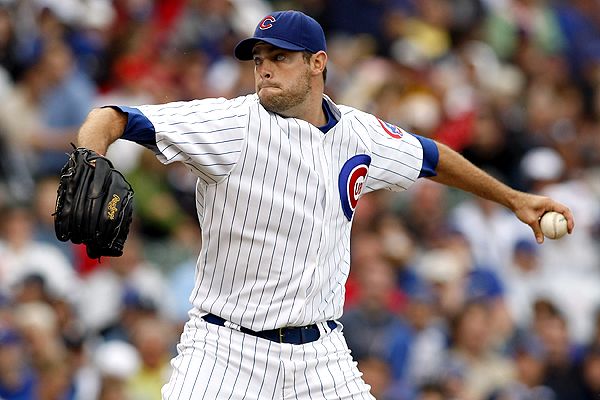
The trade of Marshall overall certainly makes the current Cubs a worse team, seeing as the bullpen was the team’s lone major strength on the roster.  Marshall was the center piece as one of the best setup men in the game.  A very pressing need, though, in rotation depth was aided by this trade, as 25-year-old Travis Wood joins the roster.  Wood has played in two major league seasons with decent yet inconsistent success.  

Looking at the Cubs rotation right now, though, this includes Ryan Dempster, Matt Garza pending any possibly trade, Andrew Cashner, and Randy Wells, and you can see the Cubs need this depth.  I’d much prefer Wood over any of Rodrigo Lopez, Ramon Ortiz, or Doug Davis.  Wood wasn’t born with blow-away stuff but is almost a solid rotation candidate, and that’s good enough for me.

Now on to the smaller pieces of the deal.  The Cubs only had to give up Marshall to for the deal, but the Reds gave up Wood, the great-hitting outfielder Dave Sappelt and undersized but agile and speedy shortstop Ronald Torreyes.  Sappelt has limited major league experience; Torreyes has none.  But both players have hit well throughout the minor leagues and Torreyes brings major speed.  Sappelt could see some action on the 2012 Cubs as a sixth outfielder/injury replacement.  Torreyes has no chance of appearing at Wrigley next season; he ought to try Double-A first.  He is recorded at 5’9” but in reality is around 5’8” or 5’7” (very similar to Dustin Pedroia).  I like both players and think they both have a decent shot at being major league regulars.  Neither stars, but solid players.  ESPN’s Keith Law agrees, and I concur with Law that the Cubs have won this trade. 
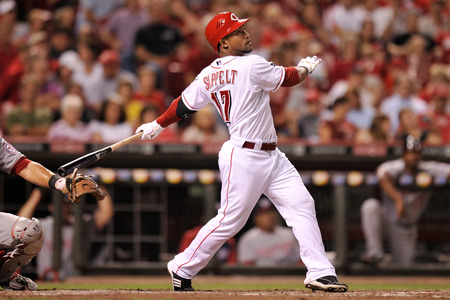
Dave Sappelt
Marshall provides the Reds with bullpen insurance.  I guess he’s the logical closer or back-up closer (which they will need, considering Francisco Cordero’s recent occasional closing issues and that he's unlikely to resign) although he has never been actually been tested as closer before.  When Carlos Marmol lost the job last summer, Marshall got a few chances in the ‘closer-by-committee’ role but that wasn’t enough of a trial to serve judgment.  He’s a loss because he has been the most consistent reliever on the Cubs since 2009 and only he and Marmol have even been a part of the unit since then.

If only counting for the trade’s effect on 2012, I still like the trade.  When early injuries to Wells and Andrew Cashner last season exposed a blatant lack of depth, Jim Hendry was forced to sign Ortiz, Davis, and Lopez in bad veteran signings who had to be signed just to fill the lineup card on a daily basis.  With this move and move forthcoming, the Cubs won’t have to do that.  Wood is young and here to stay while he develops.  It’s safe to say he will improve over the next few years.  Marshall is at his peak right at this moment and at age 29, it's hard to see him getting better over time.  He's elite at the moment but will only go downhill from here.  So in both the long-term and short-term, this deal really does makes sense for the Cubs.
         

Tuesday, July 5, 2011

Homestand Analysis: Colorado, San Francisco, Chicago (AL)

Record: 4-4
Final Record: 35-50

Against the Rockies, the Cubs finally got their first series sweep of the season.  Unfortunately, it was a one-game series, as in a makeup game for the rainout back in April.  This means the Cubs have yet to sweep a three-game series, and also haven't even won three in a row.  But play later in the week was encouraging for the Cubs.

Behind two homers each by Aramis Ramirez and Carlos Pena, the Cubs rolled past the Rockies 7-3.  The four homers would be the first four of 12 homers on the eight-game homestand.  Something was definitely in the water, as even backup Koyie Hill added one to the tally.  The annual weather swing has struck Wrigley, with that summer wind blowing out to the bleachers.

In the Colorado game, starter Matt Garza gave up a deep fly ball to left field by Carlos Gonzalez.  Alfonso Soriano went back to the track at his typical, lackadaisical pace.  Soriano eventually just pulled up and stopped, facing the wall, waiting for the ball to drop.  Garza, standing on the mound and thinking Soriano couldn't see the ball, raised his arms and said, "What are you doing?!"  Sure enough, the ball landed in the bleachers for a home run.  Garza, like most of the rest of the players, was shocked.  This evidence of the bandbox that Wrigley Field becomes in the summer has to come as a big surprise to the newcomers like Garza, who thought this ball would be a routine flyout.

The jetstream helped the Cubs for the rest of the homestand.  Ramirez hit six homers on it, en route to a well-deserved National League Player of the Week award.  But even that couldn't help the Cubs from looking absolutely dreadful in the doubleheader against the Giants on last Tuesday.  The Cubs were blown out by baseball's worst offense, reminiscent of their similar drubbing of the Cubs at Wrigley Field last year.  For the Cubs, Doug Davis and Rodrigo Lopez started the two games and the results are history.

Thankfully, the Cubs salvaged the last two games in impressive fashion.  A 1-0 ninth inning lead was blown by Carlos Marmol, but Ramirez singled home the winning run just a half-inning later on Wednesday night.

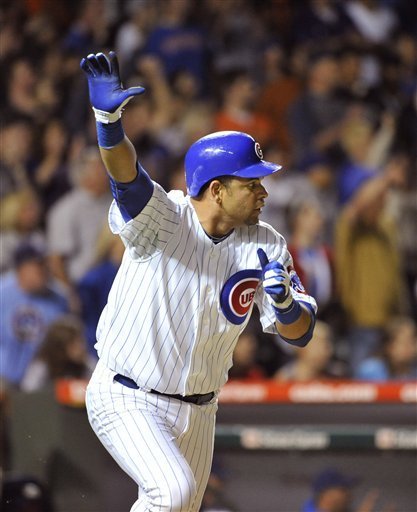
On Thursday afternoon, the Cubs put together one of their most complete wins since 2008.  Marcos Mateo pitched five incredible innings of relief after Carlos Zambrano's injury allowed him just one inning.  Ramirez erased a 1-0 deficit on a 95 mph fastball off Giants closer Brian Wilson.  Darwin Barney hit a huge clutch double in the 13th inning to tie the game at two after the Giants took the lead in the top half.  Geovany Soto stepped up and, two pitches later, ended the game with a three-run walk-off homer that was one of the most amazing moments the Cubs have had in the last decade.  The game was intense throughout and the Cubs trailed twice facing a loss, coming back both times.

In their millionth attempt to win a third game in a row, the Cubs were again denied, this time by the White Sox.  The Cubs didn't commit any errors on Friday in the series opener, according to the box score.  A mental error by manager Mike Quade cost the Cubs the lead in a tie game.  Quade has been sharply criticized this season for leaving in starters too long, and although much of this criticism is unfair, there's a case for this game to be examined.  Randy Wells gave up the two-run lead he had in the seventh, increasing his runs allowed total to four.  After Alex Rios reached base, Quade allowed Wells to pitch to Juan Pierre who lined a two-run triple to gave the Sox a lead they wouldn't give back.  Quade's mental error wasn't something major on his part, but I believe it was just the wrong decision.

A blown call at second base on a double play ball prevented the Cubs from tying Saturday's game at one, and the Cubs lost 1-0.  Garza threw a complete game despite losing, a sign I love to see.  Back in the Lou Piniella days, Garza would've been yanked after eight regardless of his low pitch count and the fact that his performance had earned him another inning.  Garza has been the beneficiary of some serious bad luck this season, and his value to the team has been far underrated thus far.

The Cubs finally got a win on Sunday, which salvages all Cubs fans everywhere from having to hear those Sox fans yappin' their yappers about how they swept us in our own park, yadda yadda yadda.  Thank God.  A Starlin Castro RBI triple and Ramirez two-run homer built a small lead, and although Kerry Wood allowed the bases loaded in the 8th, the Cubs escaped, avoiding the sweep.  The Sox now lead the Crosstown Series 12-6 since 2009.

On this homestand, Cubs pitchers really started throwing strikes.  In the case of Wells, Lopez, and Davis, who was released after his latest shellacking, this tactic didn't work so well.  In the case of Garza and Ryan Dempster, this worked very well.  Keeping a lower pitch count should allow the starters to go later in games, which is something the Cubs need.  Garza's performance on Saturday was incredible; but not as incredible as the fact that he lost.    

Thursday, June 23, 2011

Crosstown Showdown: White Sox 4, Cubs 3

Alfonso Soriano steals his first base of the season,
beating the tag from shorstop Alexei Ramirez
Peavy returns from DL, wins despite ineffective start

CWS leads 2-1

It was yet another one-run loss for the Cubs, who have lost in this fashion in three of their last four losses.  A comeback attempt for the third straight game fell short and the Cubs dropped their second in a row.

The Sox got their first two runs off Doug Davis in the fourth when A.J. Pierzynski tripled home two runs.  The Sox also got a third run in the inning from a squeeze play by utility man Brent Lillibridge.  This play represents the Sox' best attempt to play smallball.  But the truth is that such a play wasn't even necessary in that situation, especially considering Lillibridge's knack for clutch plays this season.

A Starlin Castro RBI single put the Cubs on the board, but the Sox got an insurance run just a half-inning later thanks to an error by trippin' second baseman Blake DeWitt.  Of course, Davis could have prevented the run from scoring by not hitting Lillibridge with a pitch, but the bottom line is the inning should have already been over.

Incredibly, Carlos Pena hit his third homer in as many days, as if competing head-on with counterpart Paul Konerko, who actually didn't homer in this game to end his consecutive-game-with-homer streak at five.  Pena has gathered respect from all of his teammates as the calming influence as well as the defensive leader of this team, and it's great to see him catch fire offensively, too.

Jeff Baker redeemed himself for his big strikeout last night and singled home a run in the rally that knocked Peavy out of the game in the 6th.  Unlike the night before, the Cubs were very patient with Peavy, who had serious trouble locating his breaking pitches and gave Pierzynski a workout behind the plate.  His slider was all over the place, including bouncing in the dirt.  Much of Peavy's success in his career can be attributed to the fact that everything he throws, from his running fastball to his changeup to his slider, is hard, hard, and harder.  He's got a 'hot' heater and a power slider, a lethal and winning combination.  But when he loses control, everything kind of flies off the end.  The result: 104 pitches and 10 baserunners allowed through only 5.1 innings.

The Cubs bullpen was absolutely perfect on this night, throwing three innings and striking out four while allowing no baserunners between rookie Chris Carpenter, Jeff Samardzija, and Sean Marshall.  Unfortunately, the Sox bullpen almost equally as good.  Sox closer Sergio Santos has a save in each of the last two games; he has thrown a total of 26 pitches between the two games, including only three balls, no baserunners, and five strikeouts.  This, this is the definition of dominance out of the 'pen.

Overall, this was a very entertaining series, with intriguing battles between the first basemen and Ozzie Guillen and Geovany Soto's catcher's mask.  The Cubs lost two of three but now head to Kansas City for a weekend series against the Royals who are only one game better than the Cubs record-wise.  They're also only 20-21 at Kauffman Stadium and have the bottom end of their starting rotation going, so the Cubs could capitalize.  After all, the Cubs will finally be playing someone at their own level.


Note: Don't forget about the Cubs Insider mobile website!  Use your smartphone now to read posts, organized by month in a simple HTML format.  Thanks for reading!

Tuesday, June 21, 2011

Homestand Analysis: Milwaukee, NY Yankees

Record: 4-3Final Record:  29-42

Although the Yankees slowed down the Cubs in the last two games of this homestand, the Cubs overall played much better baseball, even in the losses.  Fans also arrived in sellout or near-sellout fashion on this homestand and the Cubs definitely benefited from it.  The Cubs are still only 16-22 at home, but their play at Wrigley could heat up with the weather and fans.  

A pumped Carlos Marmol pumps his fist
after getting the save Friday against the Yankees
Against Milwaukee, team chemistry was evident as the team came through with two clutch wins in a row.  Ryan Dempster shut down one of the top offenses in baseball in the Brewers' offense, and Darwin Barney scored the only run of the game in the first game and the Cubs won 1-0.  On Tuesday night, the Cubs trailed late but rallied and won 5-4 on Starlin Castro's walk-off single.  Although the Brewers took one on Wednesday, the Cubs offense came back and put on a show Thursday, scoring 12 including homers from Carlos Pena, Kosuke Fukudome, and Alfonso Soriano.  These three wins sent the first place Brewers to Boston having barely hung on to first, and shocked at these losses.

The Yankees came to town on Friday for the first time since 2003 and second since the 1938 World Series.  The rare matchup attracted national attention, just like the Cubs-Red Sox series in May.  And the series couldn't have begun any better for the Cubs, who put together their most complete win of the season in the opener with Doug Davis surprising everyone including himself in limiting the most powerful offense in the league to just one run over seven plus innings.  Early runs were put on the board, and Reed Johnson saved the day with an amazing diving catch robbing Robinson Cano of extra bases late.

However, the Cubs would lose tight games in the late innings on both Saturday and Sunday.  Perhaps the lack of being able to close these games is due to the fundamental difference between these teams.  The Yankees were just teetering on the edge of breaking the game wide open pretty much the entirety of Sunday night, it seemed.  Putting in rookie Chris Carpenter to face Nick Swisher with two men on in the 8th was just what the Yanks needed to finally come through.  Not the greatest call on Mike Quade's part.  Swisher homered for the first three of six runs that allowed the Yankees to pull away in the 8th and 9th inning on national TV.

Curtis Granderson follows through on an
extra-base hit late Sunday at Wrigley.
Overall, signs of progress have to be looked for from this homestand.  Although the Cubs should have won six instead of just four games, the last two games against the Yankees were no pieces of cake, either.  So the fact that the Cubs played competitively for most of the game is a good sign.

Attendance for the three game series totaled over 126,000, which set an all-time Wrigley record for attendance in a three game set, beating the previous record of almost 125,000 set in July 2007 against the Astros.  Friday and Saturday's attendance both were over 42,000, a mark that hasn't been reached since the 2007 and 2008 playoffs.  But Saturday's attendance, 42,236, surpasses all three of the home playoff games from those two seasons.  Because the bleacher expansion of 2006 added about 3,000 seats to the ballpark, that number also surpasses all of the 2003 playoff games.  This means that Saturday's attendance could be the largest in decades, although I don't know how many.

The improved play came just in time for the series with those evil White Sox, who lost the first game last night 6-3.  Watch for the next couple weeks to decide the season for the Cubs, who will need to determine trade deadline status soon.

Friday, February 11, 2011

Special Wrigley Field 'Ground Rules'

Take one look at Wrigley Field, and you know it clearly isn't like any another ballpark.  But did you know that Wrigley has its own set of special rules for balls going places or hitting things?  These rules are known by all umpires and can be found here.  Here we go:


  • "1. Baseball hits top or face of screen in front of bleacher wall and bounces back on playing field -- In Play
  • 2. Baseball hits top of screen and drops between screen and wall -- Home Run
  • 3. Baseball hits screen and bounces into bleachers -- Home Run
  • 4. Baseball sticks in screen in front of bleachers -- Double
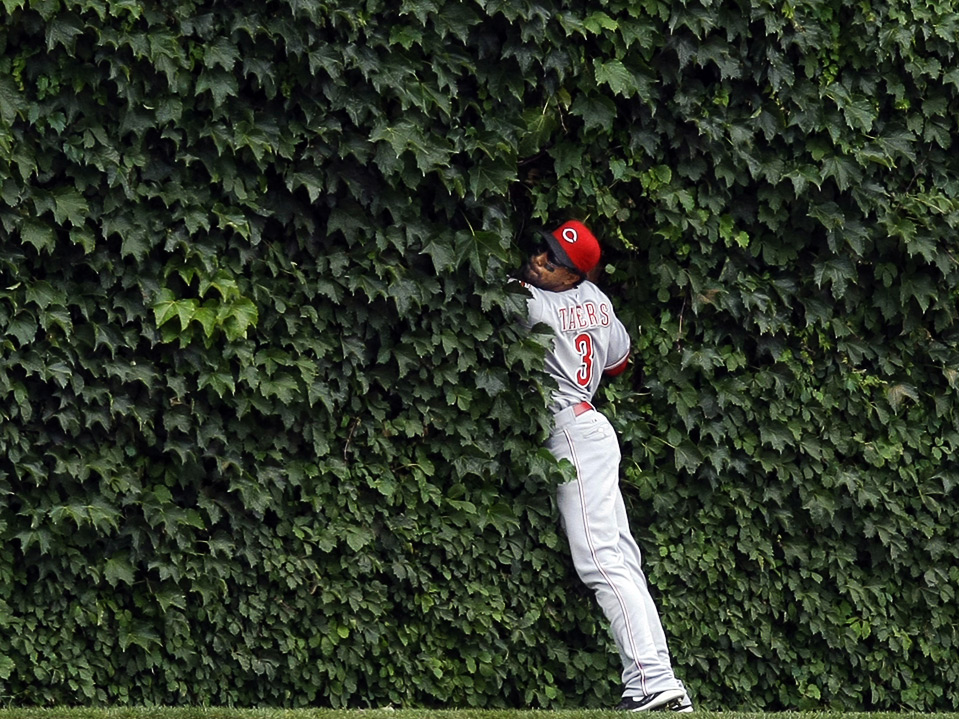
  • 5. Baseball sticks in vines on bleacher wall -- Double
  • 6. Baseball comes out of vines -- In Play
  • 7. Baseball hits leftfield or rightfield foul markers above painted mark -- Home Run
  • 8. Baseball hits foul markers below painted mark and bounces back on playing field -- In Play
  • 9. Baseball goes under grates in leftfield or rightfield and remains there -- Double
  • 10. Baseball goes in or under grates on either side of home plate and remains there:
    • Pitched Ball- One Base
    • Thrown Ball - Two Bases
  • Also: Players cannot enter the dugout steps at Wrigley Field to catch any foul pop fly."


Perhaps the most common of these rules is #5, where an umpire's rule of thumb comes into play.  Hunter Pence did this in 2009 and although I don't have any video of it, we'll use him as an example.  When the ball was hit and rolled under the ivy in right center, Pence immediately ran over and put both hands up in the air as if claiming innocence.  Although I don't think this procedure is even in the MLB Rulebook, umpires understand this as a sign that the ball is stuck in the ivy and cannot be taken out, resulting in a double.  However, had Pence gone through the ivy looking for the ball, the play is still active and the hitter could keep running for an inside the park homer.  But also, had Pence just put his hands up even though he could get to the ball but didn't want to allow a triple, the umpire could deny his request for a double.  See when a player puts their hands up using this rule, the umpire closest to the spot has to run out and make sure the ball is not in a place the outfielder could get it, if the umpire can find it at all.


Many home runs over the years at Wrigley have bounced into the screen then to be grabbed by a fan from the first row of the bleachers.  These are only homers thanks to rule #2.  However, if the ball doesn't touch the wall or get into the bleachers, apparently, it's not a home run.  This is highly unlikely and I don't know that it has ever happened due to the angle of the screen, but according to rule #4 the ball must hit the wall or else it isn't a home run.  I don't really understand this rule because the yellow line to signify where the home runs must be hit past is on the screen, meaning any contact on the top of the screen should be a home run.  


I think the note at the bottom about foul pop flies is interesting as well.  In the event that a player had enough time to enter the dugout via the stairs to catch a foul pop up, which I have never heard of in any stadium ever, would he know that the catch would be voided by use of the stairs?  Who knows.  Besides, who needs stairs when you can just awkwardly tumble over the railing?  Well those were the main things I noticed in these rules.  While some of these rules might never come into play, there's something you didn't know.  


Monday, April 19, 2010

Citi Field

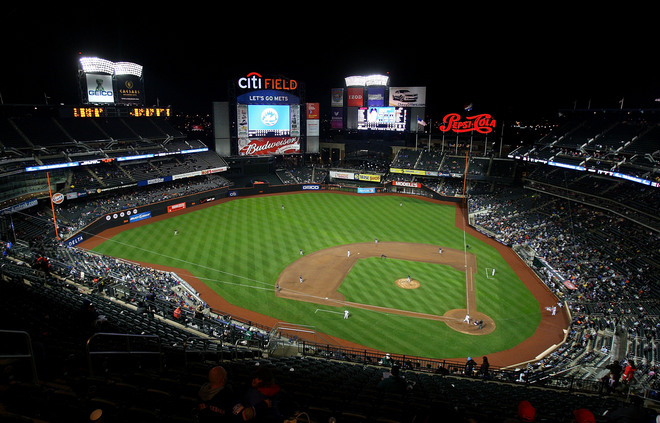
The Cubs lost 6-1 tonight on a late breakout of Mets offense, partly contributed by Ike Davis, making his major league debut as the Mets' top prospect.  27,000 fans saw the game in the cavernous Citi Field, a place I've been trying to figure out.  In the debut game last April on ESPN featuring the Padres at Mets, the Padres pulled off the shocker in a 6-5 win.  Then, the park looked big and cool with a lot of modern amenities, a true big city stadium.  However, as the season went on, the disappointment and negativity that surrounded the Mets' season seemed to drift and flow through the stadium.  The Mets only hit 95 home runs, easily the worst in baseball.  Citi Field is a big park.  Like really big.  Take it from an MLB The Show player who's played 16 games there and hasn't hit a home run to right field.  Shea Stadium had outfield walls eight feet high all around.  Not only are the dimensions longer in some areas at Citi, the fences are higher.  The huge left field wall has stopped more than a couple home run balls and the window wall area thing in right is a significant dropback.  The center field wall has been cut from 16 feet to 8 feet, but still more will need to be done to help out the hitters.  I just don't get the logic here; the Mets were a hitting team at the time they built the park and have had some good hitting teams before yet build this enormous pitchers' park.  Bad idea.  I think this year is the year the Mets transition into their new park finally and get comfortable with it, maybe like scoring some runs.  I hope to see a Mets winner upend the Phillies from the new park one day.  However, until more changes are made or the Mets get some serious power, Citi Field will continue to steal home runs and hold down the Mets offense that just two years ago was as explosive as any.